Introduction: Unpacking the Real Cost of Movement
Define the flow, and you define the margin—that’s the quiet rule of warehouse math. In many sites, the amr robot now sits beside conveyors and old AGVs, each tool trying to move goods with speed and control. Teams evaluating warehouse automation robots see rising demand, seasonal spikes, and routes that change by the week. Yet bottlenecks keep showing up in familiar places: transfer points, narrow aisles, and single-threaded handoffs (we’ve all seen that red light that never clears). Look, it’s simpler than you think: when paths are fixed, variability wins. Data from peer ops hint that idle capacity can run high, while travel-time variance eats SLA buffers. So the big question: how do we align routing, labor, and floor changes without locking capital into one layout?
Where do yesterday’s systems fall short?
Earlier we mapped the surface benefits—throughput, uptime, and labor balance. Here, let’s go a layer deeper into traditional solution flaws. Fixed conveyors and line-following AGVs struggle when SKU mix or pick zones shift, because hardwired routes magnify wait states. Queueing grows, while WMS or WES signals arrive late to the floor. Without local autonomy, fleets can’t self-heal around blockages, and minor incidents cascade. By contrast, fleets with SLAM, LiDAR, and edge computing nodes enable on-the-spot reroutes and safer gaps. Even power converters and charging strategy matter: if charge cycles bunch up, you get synchronized downtime—funny how that works, right? Fleet orchestration becomes the control tower for variance, not just a scheduler. That’s our pivot point to what comes next.
Comparative Lenses: Principles That Separate Flexibility from Fragility
What’s Next
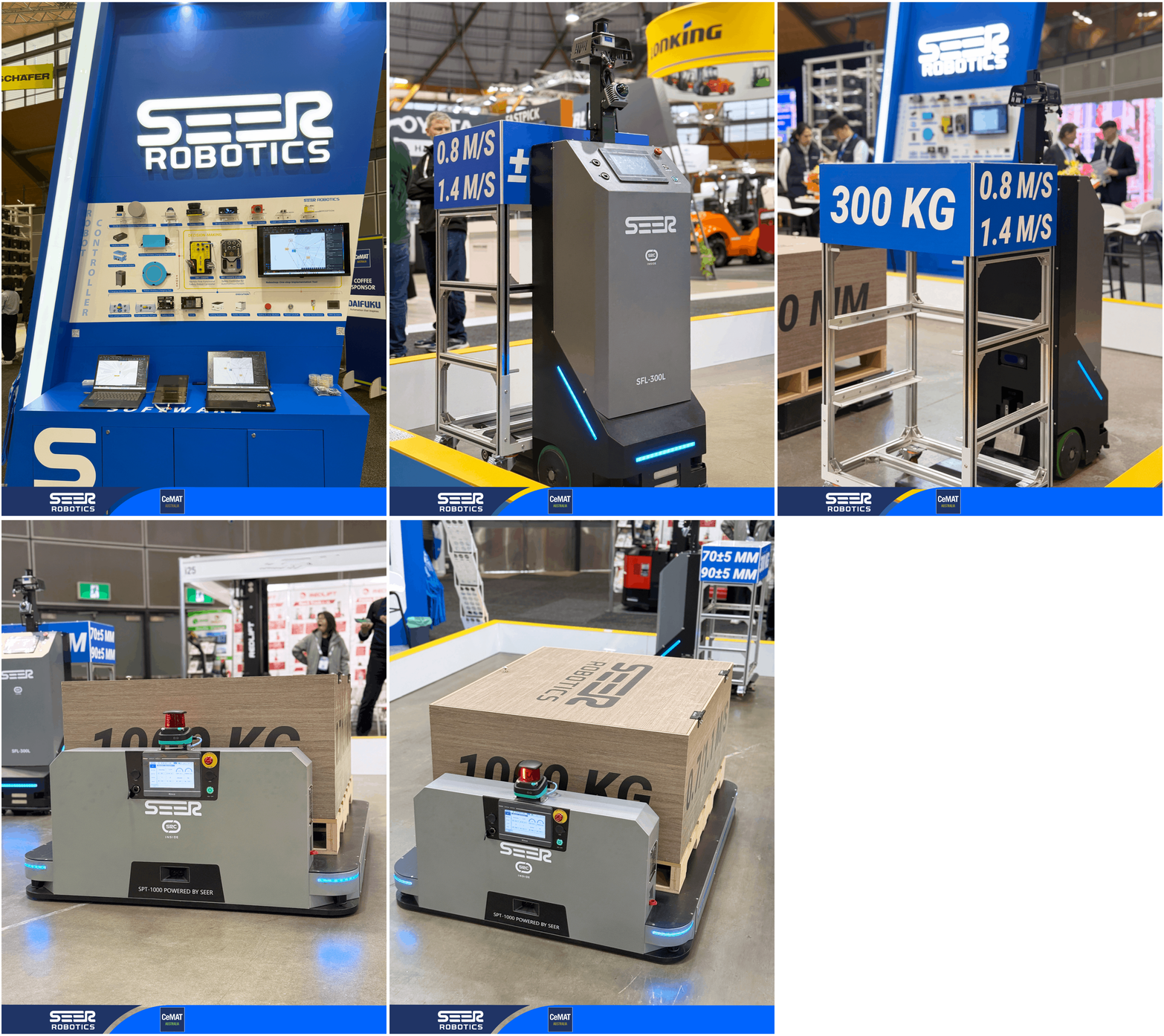
From a forward-looking view, the difference is not just the vehicle; it’s the control logic behind it. Newer warehouse automation robots lean on dynamic path planning and multi-agent coordination, so detours are normal, not exceptions. SLAM fuses LiDAR with odometry to keep maps fresh when racks move or lines expand. Edge computing nodes push decisions near the action, cutting round-trips to servers and reducing stall time during WMS hiccups. And safety PLC integrations let people and robots share space with clear right-of-way rules—without dragging throughput. The result is a practical hedge: you trade a single “best” route for several good ones, chosen in real time. In volatile demand cycles, that flexibility protects margins more than a perfect, fixed design ever could.
Let’s crystallize the takeaways without repeating ourselves. Traditional gear locks capacity to a blueprint; AMR-led systems flex capacity to the shift plan. The first model scales by adding metal; the second scales by adding intelligence—plus a few robots. To choose well, track three evaluation metrics: 1) Reconfiguration time-to-value (how fast to change zones, flows, or missions), 2) Travel-time variance under load (90th percentile matters more than average), and 3) Fleet utilization per kWh, including charge scheduling and power-event resilience. If those improve, downstream KPIs—dock-to-stock, order cycle time, and SLA adherence—tend to follow. Comparative insight, in short, favors systems that route around change instead of resisting it. Knowledge shared, not hype. For more depth on orchestration and deployment patterns, see SEER Robotics.