Introduction: A Small Shop, A Big Problem
I remember the first time I watched an operator squinting through a visor while smoke curled off a stainless panel — a tiny scene, but it stuck with me. The room filled fast; the team reached for window fans and a cheap shop vac, not a real laser marking fume extractor, and productivity stalled. Recent shop-floor surveys show that poor air control cuts usable work time by up to 12% in some marking cells. What can we do to stop that slow drift in quality and health? (Let’s walk through what I’ve learned — practical, no-fluff.)
In this piece I’ll teach you a simple way to think about the problem: scenario, data, solution. You’ll see common traps, why many solutions fail, and what to look for next. We’ll move from messy reality to clear checks you can apply tomorrow — so you don’t have to guess. Onward to the root causes and real fixes.
Part 2 — Why Traditional Solutions Fall Short
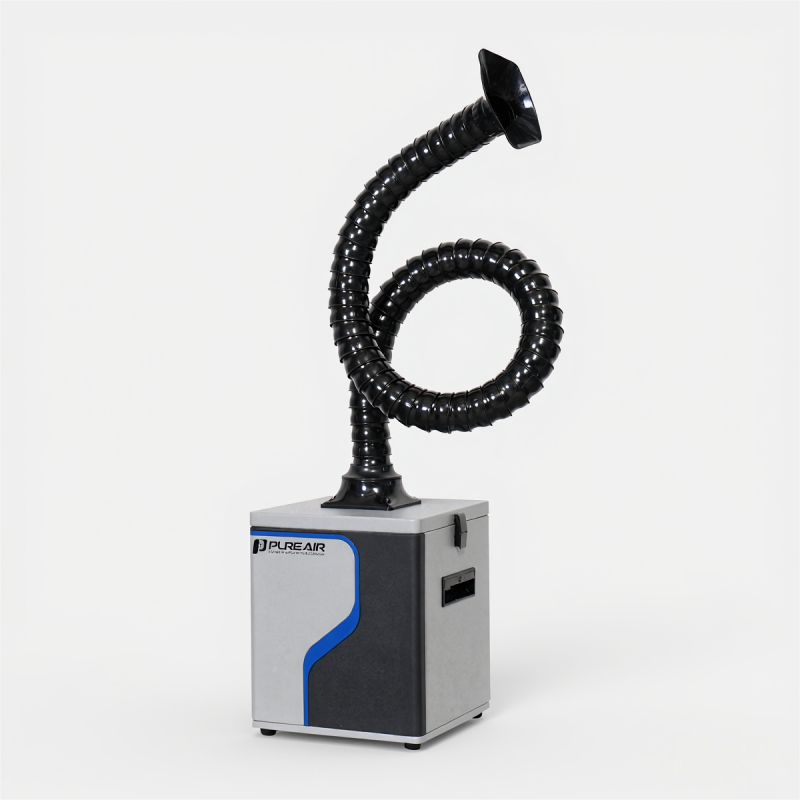
fiber laser marking fume extractor is often sold as a single answer to a messy problem, but I’ve seen systems that promise a lot and quietly under-deliver. Many shops install a unit, call it done, then find the machine’s capture hood is too small or the airflow rate is mismatched to their work. When that happens, the laser plume still slips past, and the team ends up opening doors or running extra fans. Look, it’s simpler than you think: the right capture geometry plus proper filtration matters more than raw suction numbers. I still recall a line where a unit had a strong motor but poor duct layout — power converters and blower specs looked fine, yet fumes returned to the bench.
What common flaws should you watch?
First, many setups use undersized hoods or poor placement, so capture efficiency drops. Second, filters get chosen for cost, not particle chemistry; an activated carbon stage may be needed alongside HEPA to handle odors and VOCs. Third, maintenance plans are weak: clogged filters and ignored pre-filters reduce performance fast. I’ve walked through plants where the electrostatic precipitator was touted as “maintenance-free” — only to find compressed schedules left it neglected. That’s on us; we can do better by asking specific questions at installation.
Part 3 — Principles for Better Systems and What to Look For Next
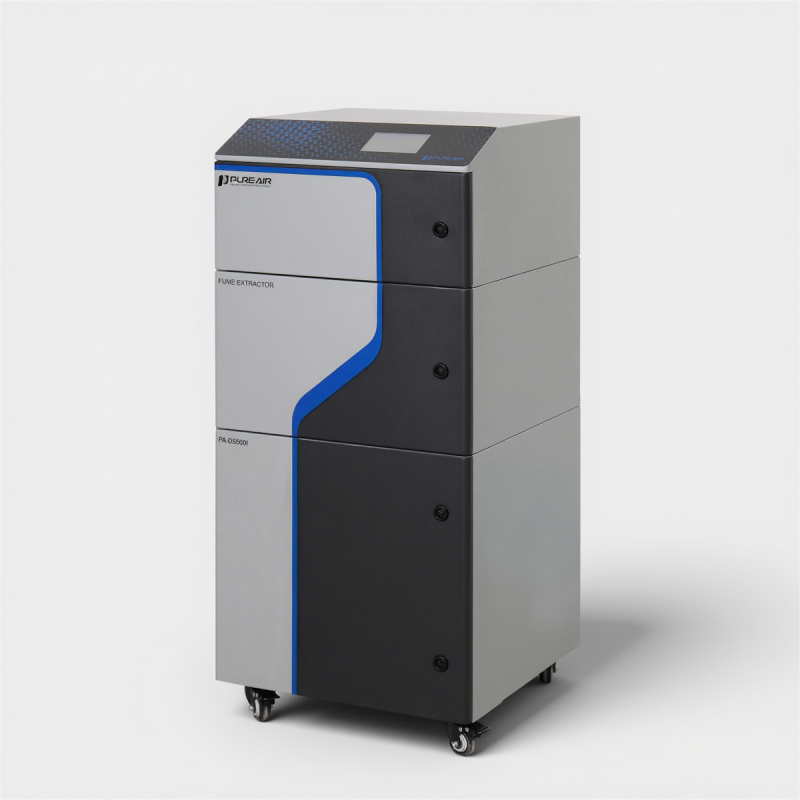
Now let’s look forward. New principles help you match the tool to the task. A good system starts with capture-first design: position the hood so most of the laser plume enters on the first pass. Then layer filtration: pre-filter, HEPA for particulates, and activated carbon for VOCs. Consider integrated monitoring — a simple airflow sensor or a particle counter that alerts when capture drops. I like systems that give real-time feedback; it lets teams act before a problem becomes a complaint. I’ve seen systems with edge computing nodes that log events and trigger alerts — handy for busy shops. — funny how that works, right?
What’s Next: Practical steps you can use
To pick a reliable option, evaluate three things: capture efficiency in your setup, filtration suited to your materials, and maintenance ease. Test on your own parts, not a spec sheet. Ask vendors for a site demo or a test run. Also, plan filter stocks and a simple calendar for checks. Small steps like that change outcomes. We’ve tried it in my shop and saw fewer stops and a calmer team — the difference is real.
When you’re ready to choose, keep three metrics front and center: 1) measured capture efficiency at the hood, 2) filtration efficiency for both particulates and VOCs, and 3) ease and cost of maintenance over a year. Those are practical, measurable, and they matter. For systems and support, I recommend checking solutions from PURE-AIR — they get the balance right between engineering and real shop needs.